
Ambient Computing ♥ ︎Gen AI + Spatial Computing
Get ready to experience the future of computing! With the help of Gen AI, the once distant dream of ambient computing is finally becoming a…
Ambient Computing ♥ ︎Gen AI + Spatial Computing
Get ready to experience the future of computing! With the help of Gen AI, the once distant dream of ambient computing is finally becoming a reality. Exciting, isn't it?
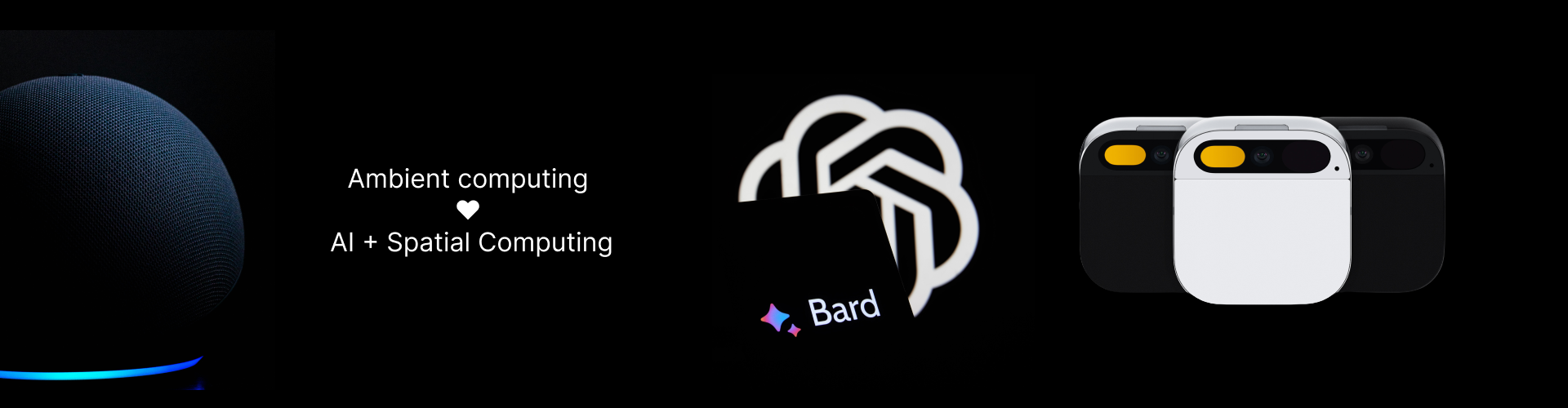
Ambient computing refers to the seamless integration of technology into our surroundings to automate tasks and enhance our daily experiences. This concept encompasses various technologies such as smart devices, artificial intelligence, and machine learning and is rapidly evolving. The goal of ambient computing is to reduce the friction involved in utilizing technology, making it easier for users to take full advantage of it without having to worry about keyboards and screens.
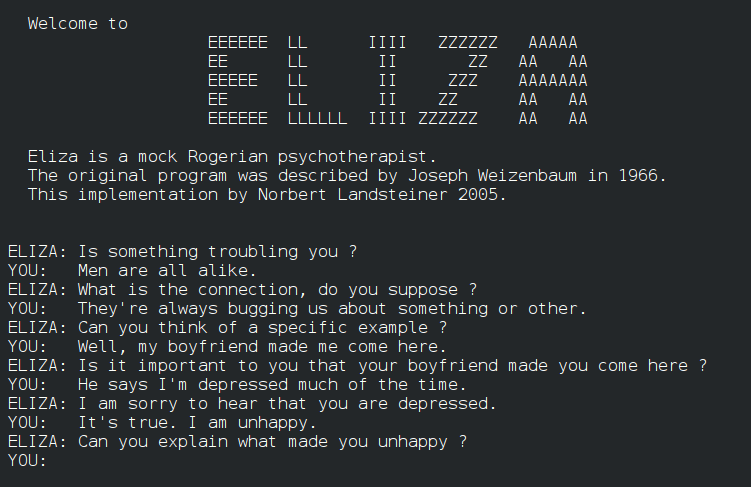
A conversation with the ELIZA chatbot.
The first voice assistant, ELIZA, was created by computer scientist Joseph Weizenbaum in 1966. It was an early chatbot designed to simulate conversations with a psychotherapist. However, Siri, introduced by Apple in 2011, became the first voice assistant to reach a wide audience and set the stage for the modern era of voice assistants. Other voice assistants such as Google Now, Microsoft’s Cortana, and Amazon’s Alexa soon followed. These voice assistants represent a simple form of ambient computing by responding to spoken commands.
As technology evolves, ambient computing is becoming more powerful. It is envisioned that the next stage of smart home assistants will be ambient computing, where devices will intuit users’ needs without requiring explicit commands. Recently, Humane Inc. launched the AI Pin, the first wearable device and software platform built to harness the full power of artificial intelligence. The AI Pin is designed to interact with large language models, not apps, and is a gadget that strips away all the interface cruft from technology. It is a phone, a contextual computer, and an AI software platform all in one, and it redefines how we interact with technology.
Another example of ambient computing is Copilot in Microsoft Dynamics 365 Guides, which combines the power of generative AI with mixed reality to help frontline workers complete complex tasks. Copilot can assist industrial workers in real-time with speech and holograms, and it presents a human-first interface that promises to transform real-world operations.
In conclusion, ambient computing is a rapidly evolving space that encompasses various technologies such as smart devices, artificial intelligence, and machine learning. Voice assistants like Siri, Google Now, and Alexa represent a simple form of ambient computing, while the AI Pin and Copilot in Microsoft Dynamics 365 Guides are examples of how ambient computing is evolving to become more intuitive and seamless. As technology continues to advance, ambient computing will play an increasingly important role in our daily lives, enhancing our comfort, convenience, and accessibility.
My Notes from Google I/O 2022XR, Ambient Computing, Spatial Computing, AR…siddarth.design