From Terminal to Control Centre:
The Rise of ADEs
From Terminal to Control Centre:
The Rise of ADEs
1. Beyond the “Dumb Pipe”
Historically, the terminal was a “dumb pipe” — you gave it a command, it gave you text. Today, in tools like Warp and CMUX, the terminal is the “brain.” Instead of running a single script, you are managing a swarm of agents.
In an ADE, your terminal understands state. It knows when an agent is researching, when it’s writing code, and when it’s stuck waiting for your permission to run a “dangerous” command.
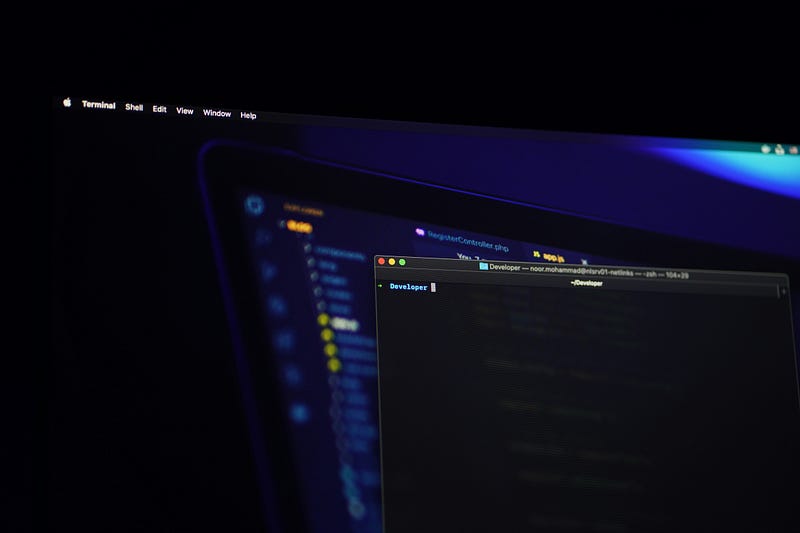
Photo by Mohammad Rahmani on Unsplash
2. The Multi-Agent Workflow
ADEs are designed for parallelism. Rather than one terminal tab per project, you might have one workspace per feature, with multiple agents working in parallel:
- Pane 1: An agent researching API documentation in an embedded browser.
- Pane 2: An agent writing the implementation in a git worktree.
- Pane 3: A “watcher” agent monitoring logs and providing real-time fixes.
3. Key Innovation: Visual Orchestration
The most striking change is how ADEs communicate.
- Notification Rings: In CMUX, panes literally “glow” with blue rings when an agent needs attention, allowing you to ignore the scrolling wall of text until your input is actually required.
- Process Dashboards: Solo replaces the chaotic list of background processes with a visual dashboard. It tracks CPU usage, memory, and port health, automatically restarting your dev servers if an agent accidentally crashes them during a test.
- Embedded Browsers: Modern ADEs like CMUX include built-in, scriptable browsers. This allows agents to navigate websites, click buttons, and verify the UI they just built without ever leaving the terminal environment.
The ADE Comparison Table: 2026 Edition
+------------------+-----------------------+-----------------------+-----------------------+-----------------------+
| Feature | Warp (Agent Mode) | CMUX | Solo | dmux |
+------------------+-----------------------+-----------------------+-----------------------+-----------------------+
| Primary Goal | AI-First Productivity | Parallel Agent Swarms | Stack Health/Life | Persistence & Context |
+------------------+-----------------------+-----------------------+-----------------------+-----------------------+
| Best Feature | Oz: Interactive Chat | Notification Rings | Auto-Restart Servers | Isolated Worktrees |
+------------------+-----------------------+-----------------------+-----------------------+-----------------------+
| Integrations | Cloud, GitHub, Slack | Unix Sockets & API | MCP & YAML Configs | Git-integrated TUI |
+------------------+-----------------------+-----------------------+-----------------------+-----------------------+
| OS Support | macOS, Linux, Win | macOS Only | macOS (Desktop App) | Cross-platform (CLI) |
+------------------+-----------------------+-----------------------+-----------------------+-----------------------+
| Rendering | Native Rust (GPU) | Libghostty (GPU) | Tauri / Webview | Standard TUI |
+------------------+-----------------------+-----------------------+-----------------------+-----------------------+
Conclusion: The New Developer Persona
We are witnessing a fork in developer culture. While performance purists will always love the raw speed of Alacritty or Ghostty, a new class of “Orchestrators” is emerging. For them, the terminal isn’t just for typing; it’s a mission control for their AI fleet.
The shift to ADEs isn’t just about new software — it’s about a new way to work. We are moving from being coders to being architects of autonomous systems.