Mastering Problem Solving
From Data-Driven Strategies to Quick Fixes
Mastering Problem Solving
From Data-Driven Strategies to Quick Fixes
As a Product Manager, problem-solving is a core skill and a daily responsibility. Whether optimizing user experience, addressing bugs, or making high-level strategic decisions, using a suitable problem-solving model can dramatically improve outcomes. This post will explore seven essential problem-solving models when to use each, and the pros and cons of these methods. From the data-driven scientific method to the creative design process, we’ll dive deep into how each can serve your product goals.

https://unsplash.com/photos/a-drawing-of-a-colorful-octopus-6Y4EzfSP5Tc
The Scientific Method: Data-Driven Hypothesis Testing
Definition:
The scientific method is a structured process for testing hypotheses and gathering data to validate or debunk assumptions. This model uses experiments to refine ideas and solve problems based on real-world feedback.
When to Use:
It is best used when empirical data is needed to drive decisions, such as when testing a new product feature or exploring a customer behaviour hypothesis.

Scientific Method
Pros:
- Backed by data, providing precise results.
- Structured and repeatable.
Cons:
- It can be time-consuming.
- It may not be suitable for problems that need quick resolution.
Example:
You are testing whether introducing a one-click checkout increases conversion rates on your e-commerce platform.
2. Problem-Solving Model: Step-by-Step Resolution
Definition:
This model breaks down a problem into clear, manageable steps: defining it, identifying root causes, developing solutions, implementing them, and evaluating outcomes.
When to Use:
Ideal for operational or technical issues where the problem is well-defined but requires a structured approach.
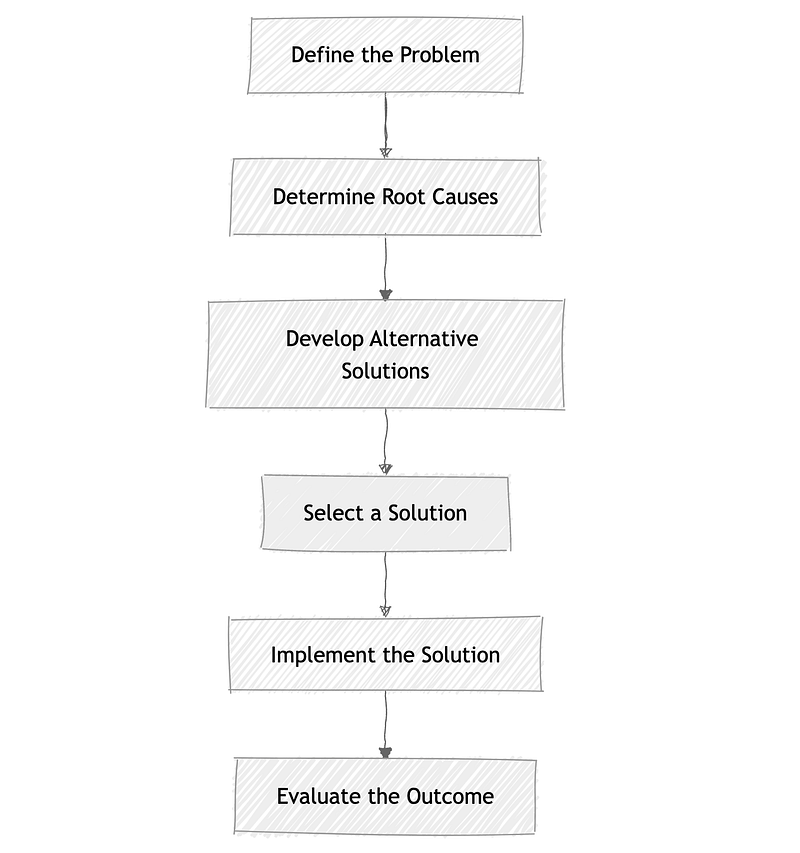
Problem-Solving Model
Pros:
- Clear and organized.
- Effective for tactical decision-making.
Cons:
- Limited flexibility for complex problems.
- Requires clearly defined issues.
Example:
We address high cart abandonment by simplifying the checkout process and analyzing the results.
3. Board Strategy Process: Long-Term Business Planning
Definition:
This model is used for long-term strategic decisions involving scanning the environment, analyzing issues, and developing business strategies to meet objectives.
When to Use:
Perfect for making high-level business decisions like market expansion, mergers, or diversification.
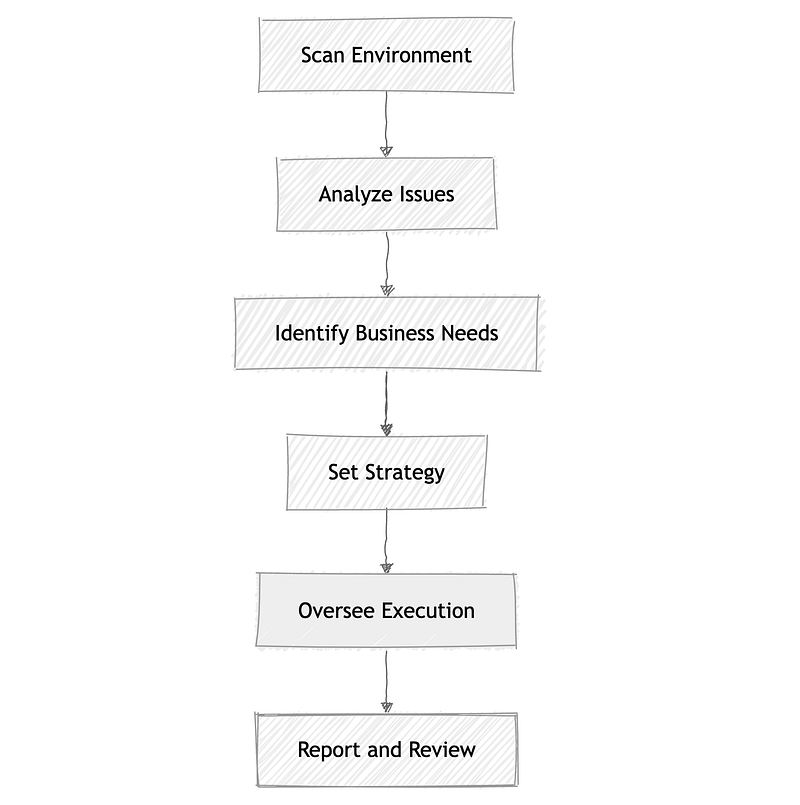
Board Strategy Process
Pros:
- Comprehensive and future-focused.
- Provides a broad view of the business environment.
Cons:
- Time-consuming.
- It may not address immediate concerns.
Example:
After researching competitors, customer preferences, and pricing strategies, we are expanding a product into a new market.
4. Risk Management Process: Preventive Approach
Definition:
Risk management involves identifying potential risks, analyzing them, and implementing controls to mitigate their impact before they become serious problems.
When to Use:
Use this for product launches or technical upgrades where security, financial, or legal risks could arise.
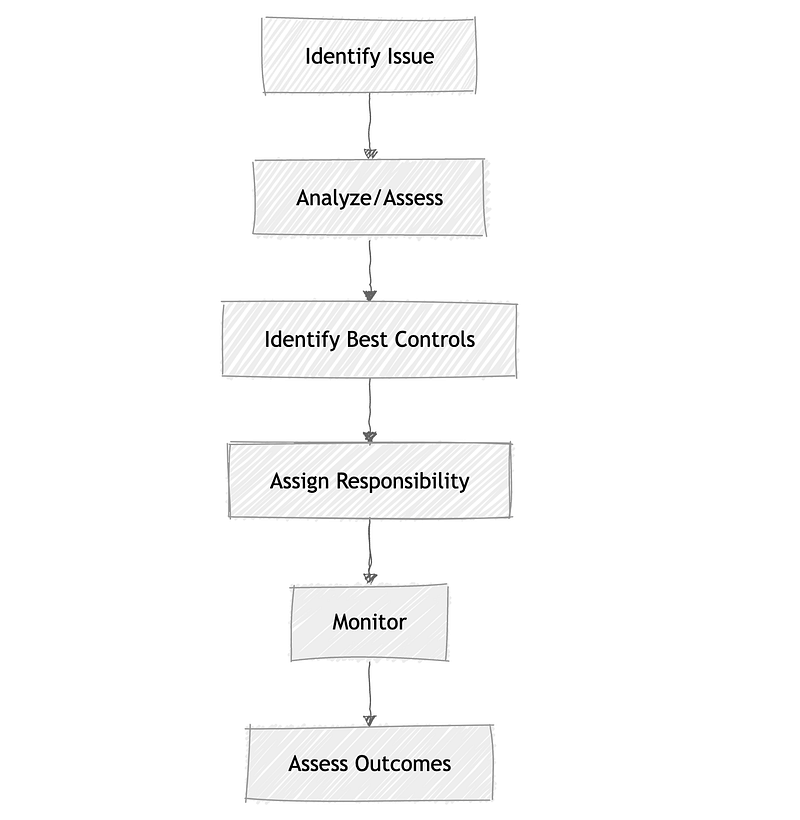
Risk Management Process
Pros:
- Proactively reduces risks.
- Encourages careful planning.
Cons:
- It can slow down decision-making.
- May overemphasize caution.
Example:
It implements security measures before launching a new feature that handles sensitive user data.
5. Management Decision Process: Quick and Focused
Definition:
This model focuses on quick decision-making by diagnosing the problem, assigning tasks, and rapidly implementing solutions.
When to Use:
It is ideal for handling urgent operational issues like bugs or outages.

Management Decision Process
Pros:
- Quick and efficient.
- Well-suited for fast resolution.
Cons:
- Reactive rather than proactive.
- May miss underlying causes.
Example:
I was resolving a bug causing app crashes by quickly identifying the issue, assigning a fix, and monitoring the outcome.
6. Health Treatment Process: Diagnostic Approach
Definition:
Modelled after medical diagnostics, this process involves examining symptoms, diagnosing issues, and applying a targeted solution before reviewing outcomes.
When to Use:
Great for addressing customer complaints or performance issues that require a thorough diagnosis before applying a fix.

Health Treatment Process
Pros:
- Comprehensive and detailed.
- Ensures that all symptoms are addressed.
Cons:
- Time-consuming.
- Not suitable for urgent issues.
Example:
It is identifying the cause of customer complaints about slow app load times and implementing infrastructure improvements.
7. Design Process: Iterative Creativity
Definition:
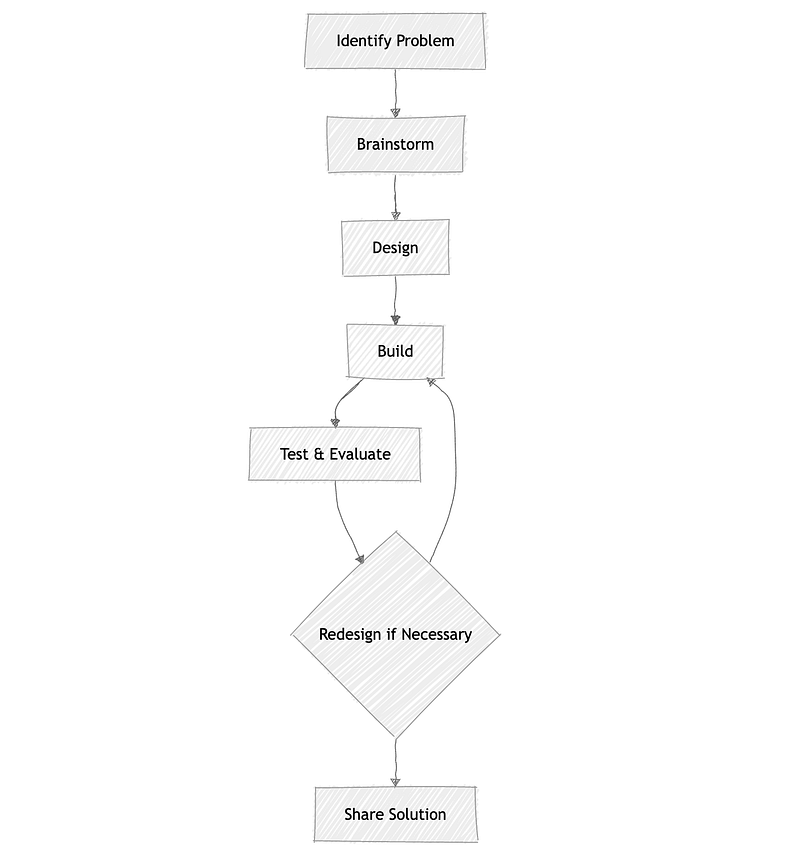
The design process focuses on creativity and iteration, involving brainstorming, prototyping, testing, and refining solutions based on user feedback.
When to Use:
Best for product design, UX, or innovation projects where creative solutions are needed.
Design Process
Pros:
- Encourages innovation.
- Allows iterative improvements.
Cons:
- Resource-intensive.
- Requires ongoing feedback and adjustments.
Example:
You are redesigning your product’s user interface by prototyping several ideas, testing with users, and refining based on feedback.
Choosing the Right Model
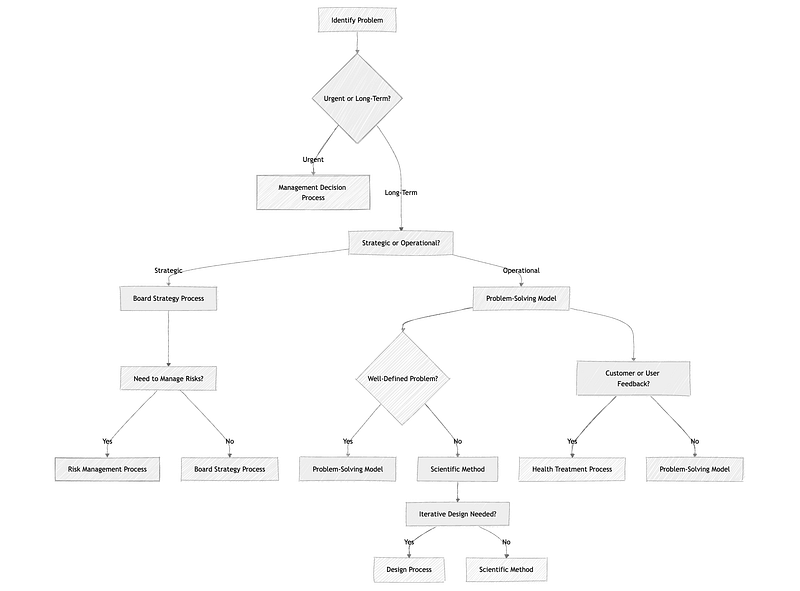
When tackling a problem, the first step is determining which model best fits the situation. The scientific method is your go-to if your issue requires testing and data. The board strategy process might be more appropriate if you’re dealing with a long-term business decision. For urgent matters, the management decision process is the best fit. By selecting the right approach, you can significantly improve the efficiency and effectiveness of your problem-solving.
Conclusion
Mastering these seven problem-solving models will allow you to navigate the complexities of product management more efficiently. Whether you’re dealing with an immediate operational issue or planning a strategic move, there’s a model designed to help you. By understanding when and how to use each, you can ensure that your product decisions are well-informed, timely, and lead to the best possible outcomes.
By applying the proper problem-solving framework to the right situation, you can become a more effective Product Manager and ensure that your team is solving the correct problems in the right ways.