
Using AI Levels to Build Better Products
Using Levels of AGI framework by Google DeepMind for product roadmapping
Using AI Levels to Build Better Products
Using Levels of AGI framework by Google DeepMind for product roadmapping

Source: Unsplash
AI promises lots of cool new product features. But making real products with AI is hard work! Teams need to cut through the hype and set realistic goals. A new paper from Google DeepMind offers some smart ideas.
Source: https://arxiv.org/pdf/2311.02462.pdf
The paper gives 6 rules to think about AI:
- Focus on what AI can do, not how it works
- Grade by skills depth and breadth
- Judge thinking abilities more than robot stuff
- Look at potential skills, not real-world use
- Use fair testing that matches reality
- Have levels, not just a finish line
This helps teams aim for AI skills that truly help users, not just flashy demos.
The paper then splits AI systems into a grid:
- How good is it at specific tasks? From basic to better than any human (Performance)
- How many different task types can it do? From narrow uses to general skills
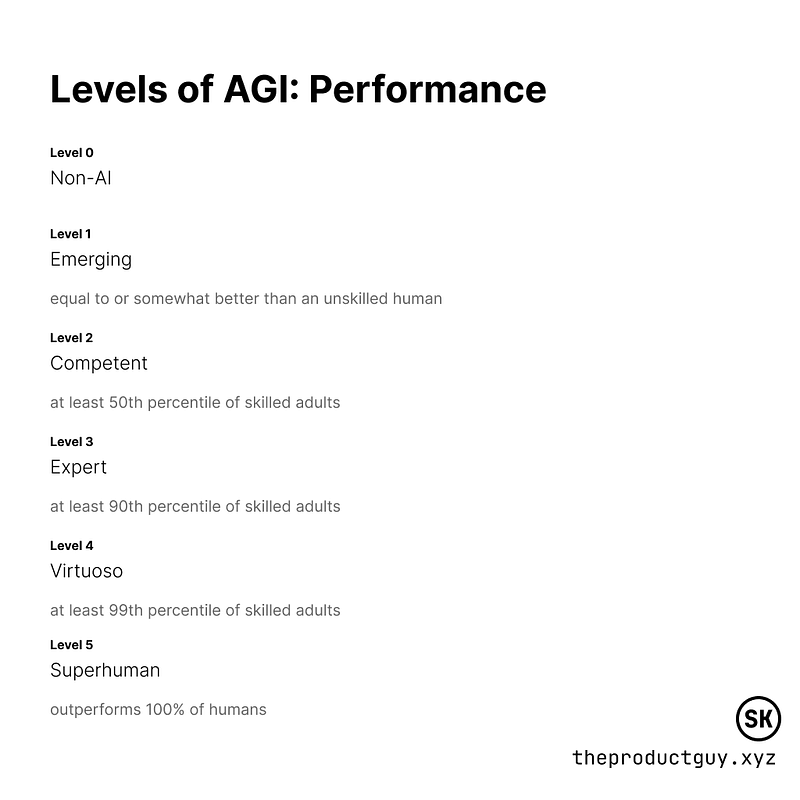
Levels of AGI: Performance
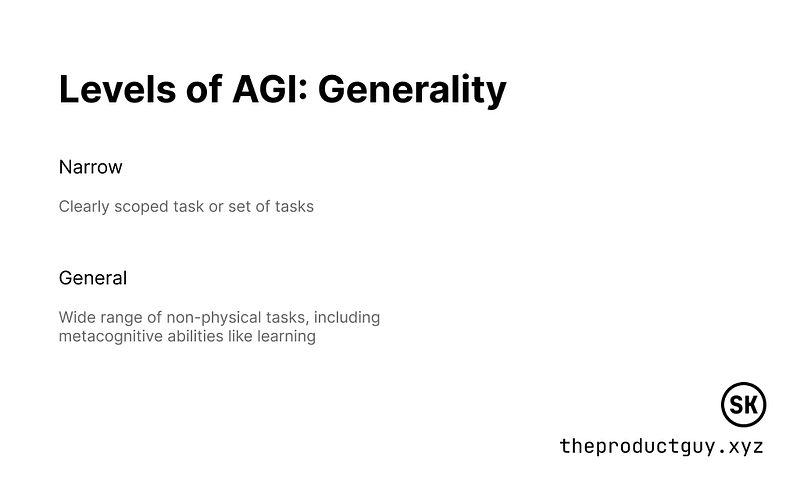
Levels of AGI: Generality
Like calling AI “pretty good at a few things” or “expert at translations.” More precise!
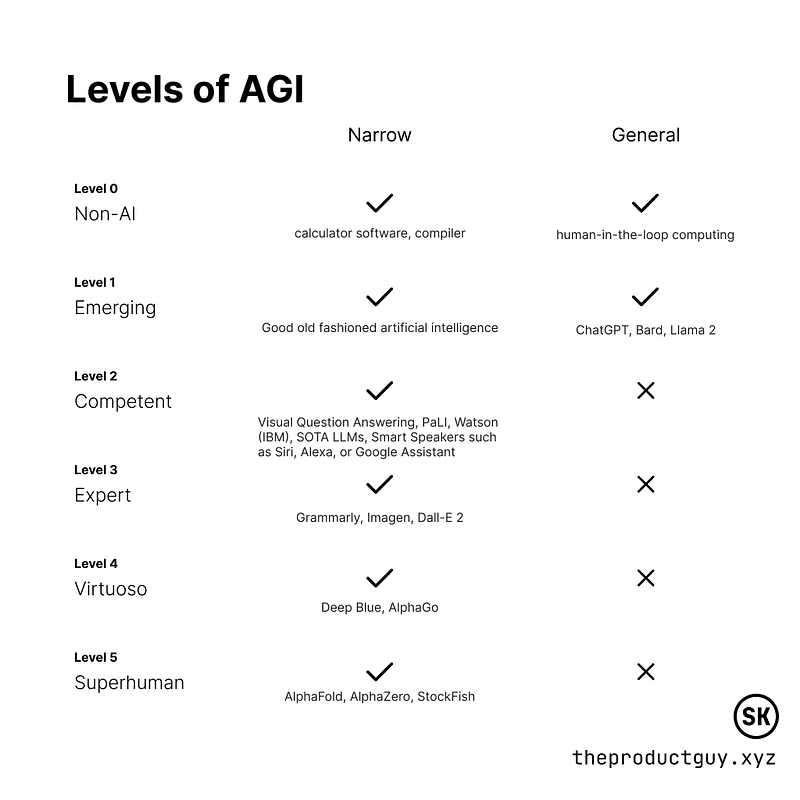
Levels of AGI
Product teams can use the grid to:
- Check what their AI can handle now
- Set roadmap goals by required skill levels
- Plan for risks at higher levels
- Design interfaces matched to ability
This helps set ambitious yet practical AI products that help people. Teams focus innovation on real user needs, not buzzwords. The AI levels bring clarity to move from promise to reality.
Few more use cases:
- Right-size AI for your product vision — Match abilities to what users need, not oversell.
- Start with narrow AI — Prove value on focused tasks first before expanding.
- Design for current AI maturity- Interaction modes should fit reliability and safety.
- Prepare for next-level risks- Anticipate downsides as AI advances to mitigate impacts.
The AI levels help teams build step-by-step responsibly — walking before running on the path to helpful, human-centric AI products.