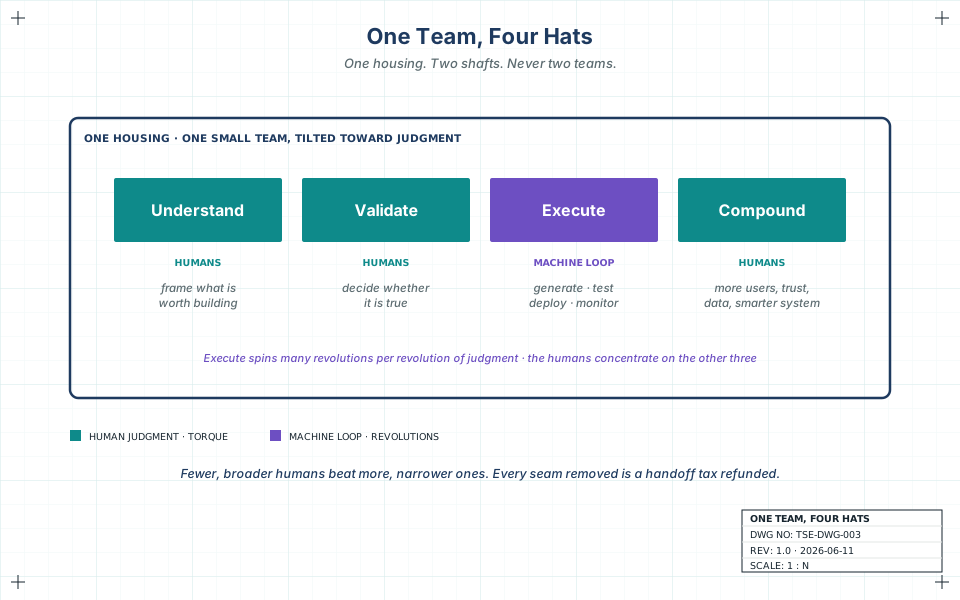
One housing, never two teams
The two-speed models of 2014 split organisations into a fast tier and a slow tier, and earned the criticism they got. This is not that. The engine splits cognition from execution within one team — one housing, two shafts, never a second-class tier. The team is small and tilts toward judgment, because as the machines absorb feasibility, fewer and broader humans beat more and narrower ones. Every seam removed is a handoff tax refunded.
The fourth hat is what the engine is for
Compounding merges three traditions that were never really rivals: product-led growth supplies the chassis, experimentation the method, and kaizen the cadence. It is the test applied to every revolution — and it is the reason the team exists, rather than a loop that simply spins. The engine is a mirror before it is a multiplier: the same industry data that shows AI raising throughput also shows it widening the gap between strong teams and weak ones, amplifying whatever capability is already there (DORA 2025). A team that cannot compound is not rescued by speed; it is exposed by it.
Distribution changes shape too
A team that audits the build side and ignores the grow side is auditing half a company. Arbitrage windows close as content costs fall to nothing; discovery migrates from search engines to answer engines; and a new buyer appears — the user's agent, immune to a beautiful onboarding flow, evaluating outcomes and machine legibility. What appreciates in every direction is trust: earned in communities, carried by people, and configured into agents by the humans who deploy them.